Loading...
INTERNET OF
MATERIALS
An open-source protocol that gives every material, component and building a unique digital identifier - so data finally flows across systems, vendors and lifecycles
Key Protocol Features
Three foundational components that make IoM the backbone for the built environment's digital future.
Globally unique IDs for all built environment objects
Materials → Components → Buildings
Each material, component, or building gets a unique digital identity that travels with it throughout its entire lifecycle, creating an unbreakable chain of custody and accountability.
Federated discovery, not central silos
Distributed network architecture
Instead of storing all data in one place, the IoM network lets anyone run a node to help locate information. Data stays at its original source, and access rules can be applied flexibly at the network level.
Truly open, permissionless
Community-governed
IoM is open-source under the MIT license - there are no vendor lock-ins, no usage fees, and governance is shared through a transparent community-driven process.
Insights
Transforming the Built Environment
In a nutshell IoM is a global, vendor-neutral ID layer plus a federated discovery network, released under a permissive open-source license.
Materials
Raw materials with unique identifiers
Components
Assembled parts & buildings elements
Buildings
Complete structures and environments
ADDITIONAL BENEFITS
Beyond the Core Protocol
IoM unlocks powerful capabilities that transform how the built environment operates and evolves.
Unlimited Extensibility

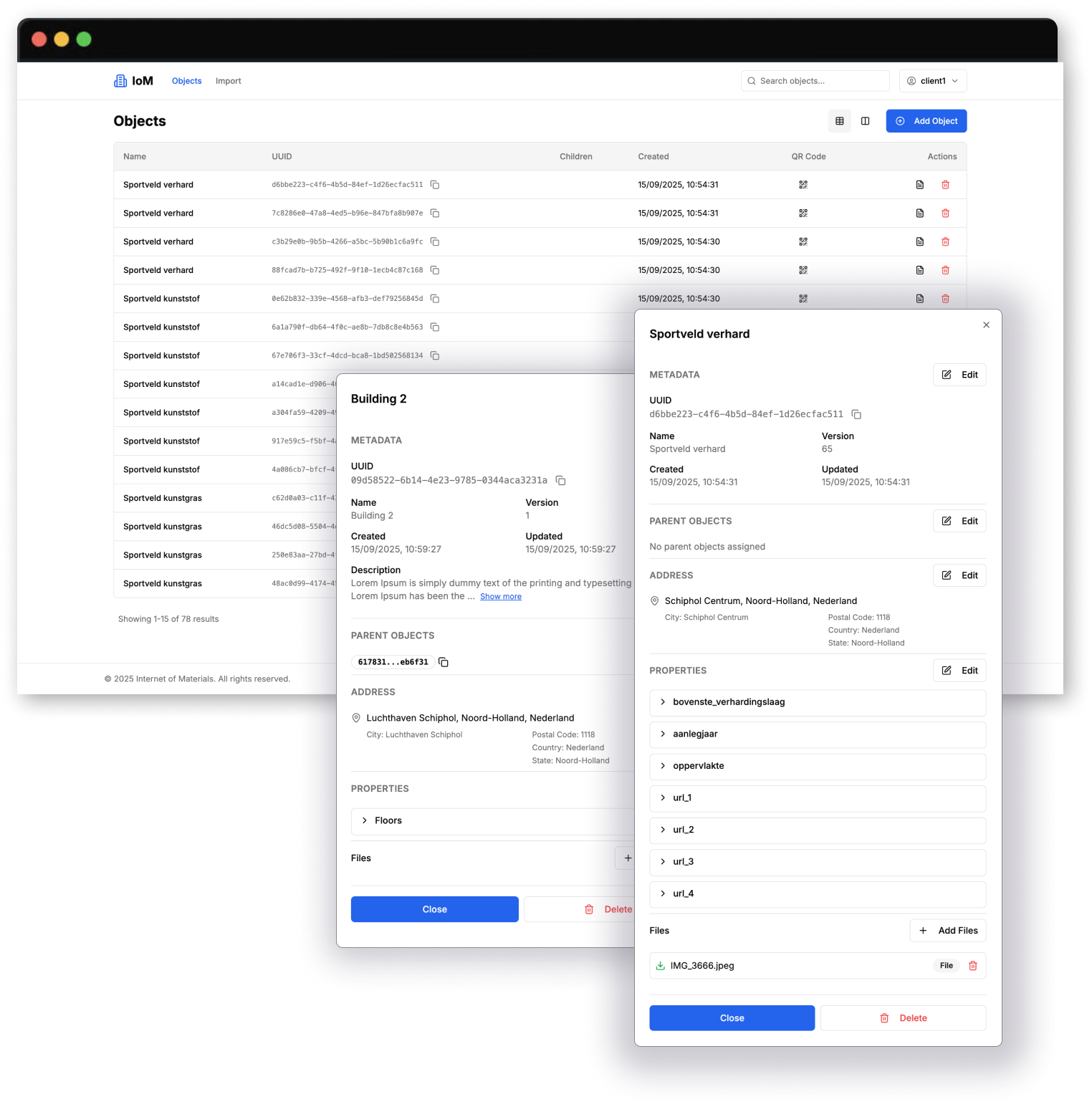
Model everything - from individual materials to entire buildings
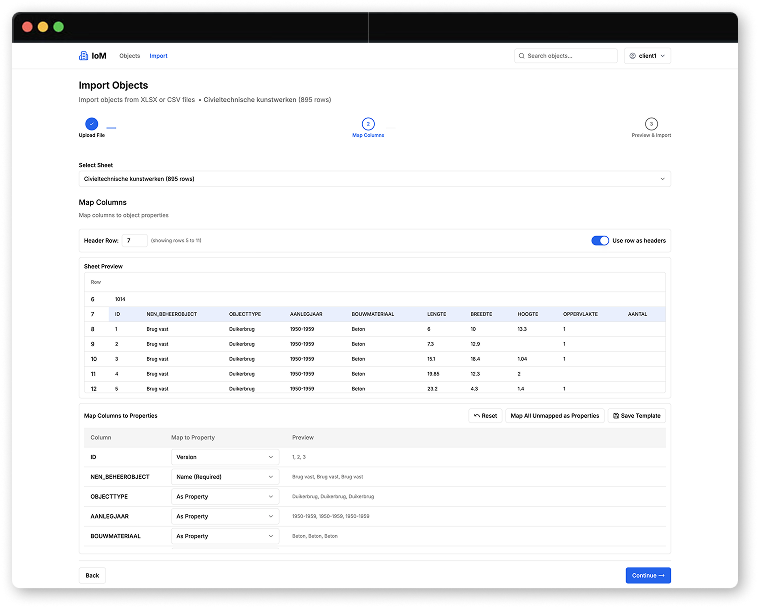
IoM scales seamlessly from the tiniest components to a high-level portfolio, letting you capture, link, and reuse data at any level of detail. Add new objects, metadata, or properties without changing the core protocol.
Vendor-Neutral Interoperability

Works with any BIM, CAFM, IoT, or future tool
Open schemas and adapters bridge IFC, Brick, BACnet, and more, eliminating proprietary lock-ins and costly re-platforming. IoM works with (not instead of) existing standards - it acts as the glue that connects data points and ensures interoperability.
AI-Ready Data Fabric

Normalised, resolvable IDs + open schemas feed analytics, digital twins, and AI-powered tools
With standardized identifiers and structured metadata, IoM creates the perfect foundation for machine learning, predictive analytics, and intelligent building management systems.
Circular & ESG Ready

Track provenance, reuse cycles, and embodied carbon automatically
Built-in lifecycle tracking enables comprehensive ESG reporting, carbon footprint analysis, and circular economy initiatives. Monitor material flows from extraction to end-of-life across your entire portfolio.
PRINCIPLES
Foundation of IoM
Explore fundamental principles that guide the Internet of Materials protocol and enable a truly open, interoperable ecosystem.
01
Every Building Object has a Unique Digital Identity
Every object - from raw materials to finished buildings - gets a persistent, globally unique identifier that travels with it throughout its entire lifecycle, creating an unbreakable digital thread.
02
Open Participation for All Stakeholders
No gatekeepers, no central authorities. Anyone can participate in the IoM ecosystem - from individual makers to global corporations. The protocol is designed to be truly permissionless and inclusive.
03
Data is Interoperable and Vendor-Neutral
IoM breaks down data silos by enabling seamless information exchange between different systems, platforms, and vendors while maintaining data ownership and privacy rights.